Whakatāne District Council is looking at crossing options for Pōhutukawa Avenue between West End Road and Mair Street, and we want to know what you think.
The road is already due for resurfacing, so now is a practical time to consider whether crossing improvements could be made at the same time.
Why are we looking at crossing improvements?
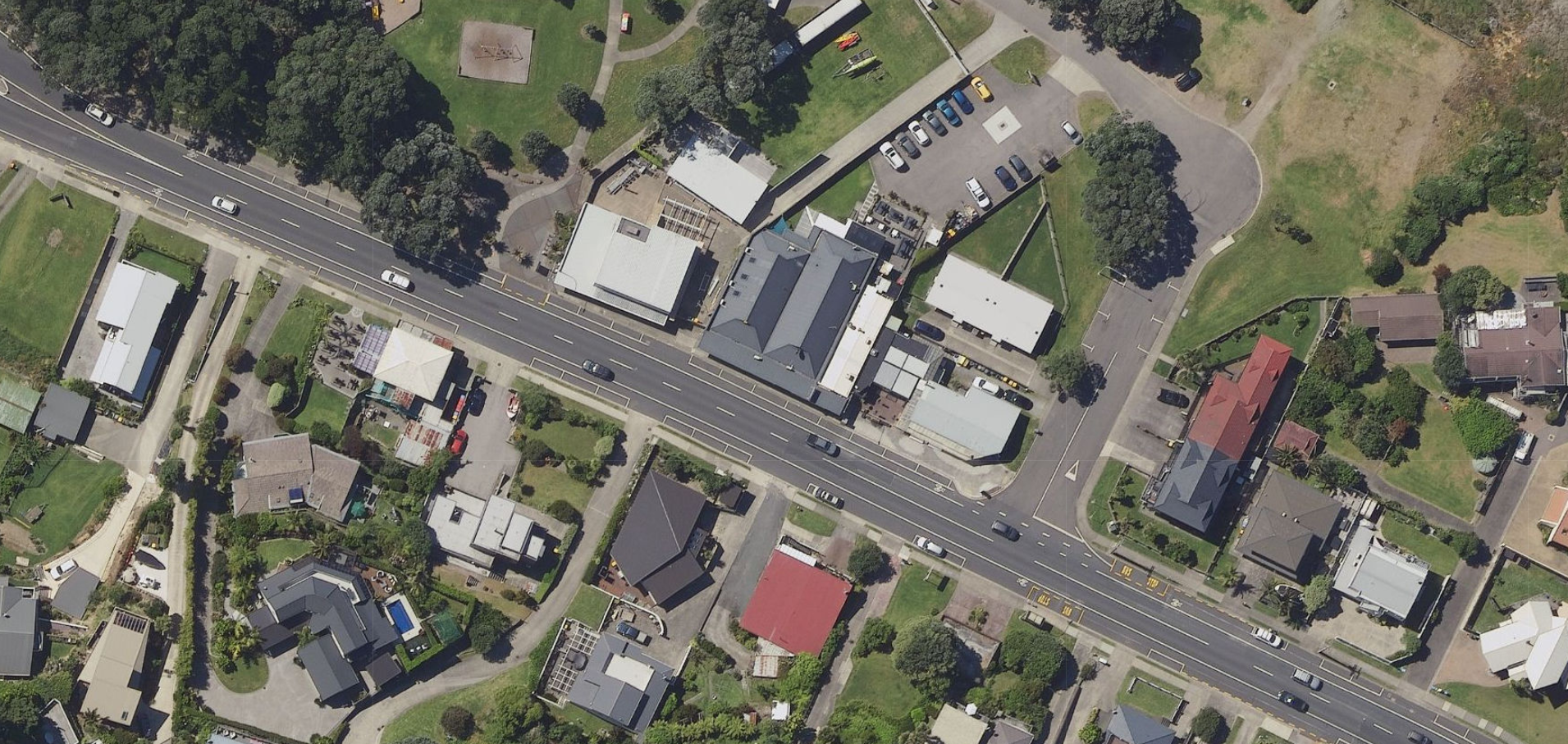
Pōhutukawa Avenue is a well-used area of Ōhope, used by people walking between the beach, shops, cafés, playground and nearby businesses, as well as people driving, cycling and parking.
Crossing improvements in this area have been considered previously, with feedback highlighting the importance of balancing pedestrian safety, accessibility, parking and cost.
The road is now scheduled for resurfacing, creating an opportunity to consider whether crossing improvements should be delivered at the same time.
Community feedback on the options will help inform a future recommendation to the Council.
The crossing options
We’ve developed three crossing improvement options for Pōhutukawa Avenue between West End Road and Mair Street, as well as the option to make no change.
Each option has different costs, parking impacts and features. The following outlines each option in more detail. Review the options and tell us which one you prefer.
Option 1: Two raised platforms
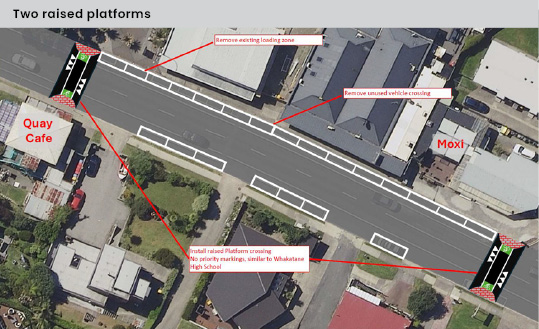 This option would install two raised platforms to create a safer, slower-speed environment for people crossing Pōhutukawa Avenue.
| Cost | $100,000 |
| Car park impact | 5 fewer car parks |
| Key benefits | - Safer, slower-speed environment for pedestrians
- Provides better visibility of pedestrians
- Provides level access for prams, wheelchairs and mobility devices
- Easier access to cafés, playground and Fairbrother Loop
|
| Considerations | - Slower vehicle speeds
- Loss of 5 car parks
- Moderate cost
|
Option 2: Two Zebra crossings with platforms
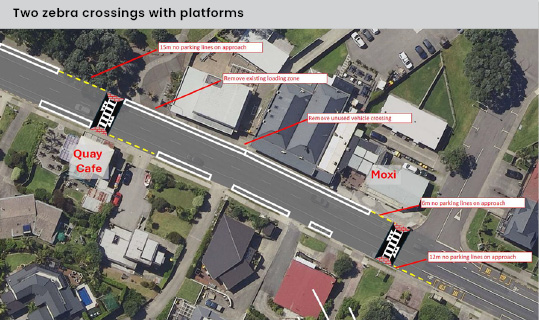 This option would install two zebra crossings on raised platforms, giving pedestrians priority in two locations.
| Cost | $120,000 |
| Car park impact | 9 fewer car parks |
| Key benefits | - Safer slow-speed environment for pedestrians
- Provides priority and better visibility for pedestrians in two locations
- Provides level access for prams, wheelchairs and mobility devices
- Easier access to cafés, playground and Fairbrother Loop
|
| Considerations | - Slower vehicle speeds
- Loss of 9 car parks
- Highest cost option
|
Option 3: Western speed hump and eastern raised crossing
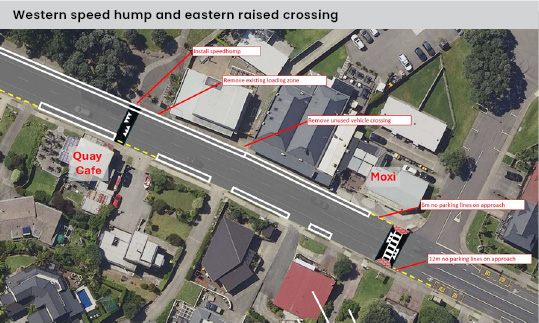 This option would install a speed hump at the western end of the area and a raised crossing at the eastern end.
| Cost | $80,000 |
| Car park impact | 3 fewer car parks |
| Key benefits | - Safer slow-speed environment for pedestrians
- Provides priority and better visibility for pedestrians in one location
- Provides level access for prams, wheelchairs and mobility devices
- Easier access to cafés, playground and Fairbrother Loop
|
| Consideration | |
Option 4: No change
Pōhutukawa Avenue would be resurfaced without adding one of the proposed crossing improvements.
| Cost |
|
| Car park impact | No change |
| Key benefits | - No additional crossing construction cost
- No parking loss from crossing improvements
|
| Considerations | - No new pedestrian crossing improvements would be delivered as part of the resurfacing works
|
Compare the options
The options differ in cost, parking impacts and the type of crossing treatment provided. The table below provides a high-level comparison of each option.
| Option | Estimated cost | Overall parking impact | Key benefits | Considerations |
| Raised platforms | $100,000 | Five less car parks | Creates a slower-speed environment for people crossing the road. Improves visibility of pedestrians and provides level access for prams, wheelchairs and mobility devices. | Loss of 5 car parks. Moderate cost. |
| Raised zebra crossings | $120,000 | Nine less car parks | Provides pedestrian priority at two crossing locations. Improves visibility and accessibility. | Loss of 9 car parks. Highest cost option. |
| One speed hump and on crossing | $80,000 | Three less car parks | Lowest parking impact of the improvement options. Provides pedestrian priority at one crossing location and improved accessibility. | Loss of 3 car parks. Moderate cost. |
| No change | No additional crossing cost | No parking change | No additional crossing construction cost and no loss of parking associated with crossing improvements. | No new crossing improvements would be delivered as part of the resurfacing work. |
What we're asking
- Which crossing option you prefer
- Why you prefer that option
- How important on-street parking is to you
- How important safe pedestrian crossing facilities are to you
- Whether future parking and beach access improvements near Mair Street should be a priority
What about Mair Street
Council has previously looked into options to improve parking and beach access in this area. There is currently no proposed project or confirmed funding. As part of this consultation, we want to understand whether the community sees improvements in this area as a priority for future investment, including how people view the potential value for money compared with other transport priorities such as resilience, safety and growth planning.
Whakatāne District Council is looking at crossing options for Pōhutukawa Avenue between West End Road and Mair Street, and we want to know what you think.
The road is already due for resurfacing, so now is a practical time to consider whether crossing improvements could be made at the same time.
Why are we looking at crossing improvements?
Pōhutukawa Avenue is a well-used area of Ōhope, used by people walking between the beach, shops, cafés, playground and nearby businesses, as well as people driving, cycling and parking.
Crossing improvements in this area have been considered previously, with feedback highlighting the importance of balancing pedestrian safety, accessibility, parking and cost.
The road is now scheduled for resurfacing, creating an opportunity to consider whether crossing improvements should be delivered at the same time.
Community feedback on the options will help inform a future recommendation to the Council.
The crossing options
We’ve developed three crossing improvement options for Pōhutukawa Avenue between West End Road and Mair Street, as well as the option to make no change.
Each option has different costs, parking impacts and features. The following outlines each option in more detail. Review the options and tell us which one you prefer.
Option 1: Two raised platforms
This option would install two raised platforms to create a safer, slower-speed environment for people crossing Pōhutukawa Avenue.
| Cost | $100,000 |
| Car park impact | 5 fewer car parks |
| Key benefits | - Safer, slower-speed environment for pedestrians
- Provides better visibility of pedestrians
- Provides level access for prams, wheelchairs and mobility devices
- Easier access to cafés, playground and Fairbrother Loop
|
| Considerations | - Slower vehicle speeds
- Loss of 5 car parks
- Moderate cost
|
Option 2: Two Zebra crossings with platforms
This option would install two zebra crossings on raised platforms, giving pedestrians priority in two locations.
| Cost | $120,000 |
| Car park impact | 9 fewer car parks |
| Key benefits | - Safer slow-speed environment for pedestrians
- Provides priority and better visibility for pedestrians in two locations
- Provides level access for prams, wheelchairs and mobility devices
- Easier access to cafés, playground and Fairbrother Loop
|
| Considerations | - Slower vehicle speeds
- Loss of 9 car parks
- Highest cost option
|
Option 3: Western speed hump and eastern raised crossing
This option would install a speed hump at the western end of the area and a raised crossing at the eastern end.
| Cost | $80,000 |
| Car park impact | 3 fewer car parks |
| Key benefits | - Safer slow-speed environment for pedestrians
- Provides priority and better visibility for pedestrians in one location
- Provides level access for prams, wheelchairs and mobility devices
- Easier access to cafés, playground and Fairbrother Loop
|
| Consideration | |
Option 4: No change
Pōhutukawa Avenue would be resurfaced without adding one of the proposed crossing improvements.
| Cost |
|
| Car park impact | No change |
| Key benefits | - No additional crossing construction cost
- No parking loss from crossing improvements
|
| Considerations | - No new pedestrian crossing improvements would be delivered as part of the resurfacing works
|
Compare the options
The options differ in cost, parking impacts and the type of crossing treatment provided. The table below provides a high-level comparison of each option.
| Option | Estimated cost | Overall parking impact | Key benefits | Considerations |
| Raised platforms | $100,000 | Five less car parks | Creates a slower-speed environment for people crossing the road. Improves visibility of pedestrians and provides level access for prams, wheelchairs and mobility devices. | Loss of 5 car parks. Moderate cost. |
| Raised zebra crossings | $120,000 | Nine less car parks | Provides pedestrian priority at two crossing locations. Improves visibility and accessibility. | Loss of 9 car parks. Highest cost option. |
| One speed hump and on crossing | $80,000 | Three less car parks | Lowest parking impact of the improvement options. Provides pedestrian priority at one crossing location and improved accessibility. | Loss of 3 car parks. Moderate cost. |
| No change | No additional crossing cost | No parking change | No additional crossing construction cost and no loss of parking associated with crossing improvements. | No new crossing improvements would be delivered as part of the resurfacing work. |
What we're asking
- Which crossing option you prefer
- Why you prefer that option
- How important on-street parking is to you
- How important safe pedestrian crossing facilities are to you
- Whether future parking and beach access improvements near Mair Street should be a priority
What about Mair Street
Council has previously looked into options to improve parking and beach access in this area. There is currently no proposed project or confirmed funding. As part of this consultation, we want to understand whether the community sees improvements in this area as a priority for future investment, including how people view the potential value for money compared with other transport priorities such as resilience, safety and growth planning.